The other day, following my introductory post on Arnold's proof of the fifth degree, one V. I. Kennedy posted a link to this remarkable lecture by a prof at the University of Toronto:
http://drorbn.net/dbnvp/AKT-140314.php
I didn't get a chance to look at the link until yesterday, because I was away. I wish Mr. Kennedy had given a little more information when he posted, because it turns out I was in Toronto at the time and if I had known, I definitely would have called on the professor, one Dror Bar-Natan. I think we would have had an interesting conversation.
What makes me think that Dror and I would have anything in common? Well, for one thing both of us had the same reaction to this video by Boaz Katz: namely, both of us, as soon as we saw the video, had to drop whatever else we were doing and tell the world about this fantastic "new" proof of fifth degree ("new" in the sense that it was just in the 1960's that Arnold came up with it.)
But that's not all. When Dror tells his class why he felt driven to talk about this proof, he explained it in almost the same words I used twenty years ago when I was the math guy on community access TV here in Winnipeg: how, when he was a student, he took a whole course in abstract algebra, sitting through a labyrinth of theorems, lemmas, and corroloraies, until one day near the end of the course the professor announced "...and therefore the fifth degree is unsolvable"; and how it had always bothered him that for all that effort, he still never really
understood why. If you watched Dror's video, you might check out this old Math with Marty episode where I say the
same thing.
The other funny thing about Dror's lecture is he goes off on a little tangent about how you can understand that the square root of two is irrational. It's funny that the "alternate" proof he shows is almost the same as the one I did on
this Math with Marty episode, except Dror refines it down to the bare bones while I work it through using numerical examples. Dror also has a hilarious punch line where he shows a "simple" one-line proof of the irrationality of any higher-order nth root of two: the joke is that his proof relies on the fact that a rational nth root of two would be contradicted by Fermat's Last Theorem, whose "proof" of course takes about nine hundred pages.
But beyond all that there's one more thing that you just can't avoid noticing through all this: it's the Jewish presence. All of us here in this discussion are Jews. Dror is a Jew. Boaz Katz is a Jew. I'm a Jew. Even V.I. Arnold is a Jew. Yes, Balarka Sen is a thirteen-year-old kid from West Bengal, but he's the exception that proves the rule. What's going on here?
Yes, we know the Jews are smart. But there's something more going on. We're brought up to believe we're smarter than everyone else, and maybe we are just a little, but it turns out there's a lot of smart
goyim out there too. And by the way, if we believe that we're so smart, we also have to be prepared to accept that we have other distinguishing characteristics, which aren't always of the positive persuasion, so to speak. I wrote about this a couple of years ago in this
blogpost, "Jewish Lightning", which asks the question: do Jews burn down their stores to collect the insurance money? But I digress.
Quite apart from the hypothetical question of how smart the Jews are, I think the present discussion illustrates another reason why Jews are high achievers in math and physics. I think we have a different aesthetic sense of math than your average white person. Dror is clearly
excited about Arnold's proof. Boaz Katz is excited about it. If you look up physics lectures by people like Feynaman or Walter Lewin of MIT, they are clearly
excited by their topics.
But it's more than just that. What we (the participants in the present discussion) all have in common is that we are excited by the beauty and elegance of an explanation which allows us to understand these things in human terms. I'm not saying that your average white person isn't also capable of experiencing the same emotional response to a math proof. It just seems to me that they aren't driven that way to the same extent. It's like you can teach a dog to walk on its hind legs, but it isn't exactly natural.
I've met enough regular white people who are "smarter" than me in my travels as a university student to be fully aware of my own limitations and the potential abilities of others. But when I compare the very smart people who I've known to the Jews like Boaz and Dror (also smarter than me), not to mention Feynmann and Lewin, I think I can pinpoint a qualitiative distinction. Most of the really smart white people I've met in math and physics seem to have an ability, incomprehensible to me, to be able to read a mathematical proof the way you or I read a newspaper article. I don't begin to know how that is possible. I can only "read" a proof line by line if I already figured out in my head what it means and where it's going.
I'm not saying some Jews don't have that purely analytical ability as well. Obviously Feynmann did. I'm just saying that I'm able to function at a pretty high level in math and physics working on a purely intuitive level. The conclusion I'm drawing is that the over-representation of the Jews at the very highest levels isn't necessarily because we're smarter than regular white people, but because we produce individuals who combine a high analytical ability with an intuitive approach driven by out unusual aesthetic sense: the same aesthetic sense that produces a Barbara Streisand or a Leonard Cohen.
In the old country, we even had a word for that quality: we called it the
pintele Yid, the Jewish spark or the "point of light". I don't think we even knew exactly what we meant by the expression, but we knew there was something there that needed its own word.
EDIT: I sent Dror an email to tell him about the discussion we've been having here, and he wrote back the next day to tell me he'd read my blogpost, but he had a small correction to make: namely, he says he's not Jewish. I guess it's possible, but I still think he might be just a
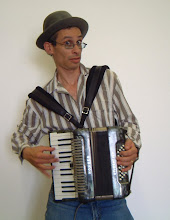
little bit Jewish. In fact, I think he looks quite a lot like the guy in The Princess Bride. What do you think?
POST-SCRIPT: I've been going over the video proofs and I think both Boaz and Dror have left out something important. I still think Arnold's proof is valid, but I don't think either of these guys have presented it correctly. I'm going to email them and ask them to respond to my criticism and we'll see what they say.
Here is my problem: I've watched both their videos again, and if I follow their logic exactly, it seems they've both proven that you can't solve the basic quintic equation:
x^5 - 2 = 0
Look at the roots. There are five of them. You can easily generate closed-loop excursions of the coefficients of the above equations in the complex plane which have the effect of reshuffling the five roots in any arbitrary order. We then look at arbitrary combinations of commutators of these permutations, and we find that it is possible to construct infinitely high towers of commutators that fail to return the roots to their original order. But we can also prove that if the roots are expressible as complicated expressions of nested radicals ("solvable in radicals"), that
any sufficiently high tower of commutators
must return the roots to their original order. This is a contradiction, and therefore the equation is not solvable in radicals.
Am I wrong, or do Boaz and Dror both fail to explain this case in their videos? Yes, it's a mistake that can be corrected, but I don't think it's a trivial mistake. Because to fix this mistake I think you have to invoke some Galois theory, and it seems that avoiding Galois theory was one of the big "selling points" of Arnold's method in the first place.
Someone tell me I've got this wrong...