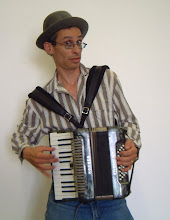
I used to participate in an online discussion group at physicsforums.com until I was banned for life earlier this year. I still sometimes notice some topics that I am motivated to comment on, and today was one such occasion. Since I can't post to the newsgroup, I will use my blogsite to put in my two cents worth.
A "newbie" using the name of "Infrasound" posted a question about absorption of light by solids. It's a very good question. Basically he notes that the traditional explanation of exitation of electron orbitals fails to explain where the light actually goes. Every electron that is excited to a higher energy level must sooner or later decay back to the ground state. It's a non-dissipative process which cannot absorb energy. So where does the light go?
Infrasound was quickly put in his place by a several veteran posters including the cryptically named cthugha and alxm, and of course the omniscient ZapperZ. Basically they tell Infrasound to get a life before wasting their time with such simple questions whose answer is to be found in any first-year text. It is not, they say, the atomic energy levels which are excited: those are too high to be susceptible to optical or infrared; it is rather the collective energy levels, which can be much closer spaced.
Infrasound rightly points out that this answer merely evades the question without answering the fundamental point about absorption. As long as the modes are driven by a specific frequency of light, they will give off the same frequency when they decay back to the ground state. So the colors are scattered but never absorbed. This objection is met by scoffing on the part of the above-mentioned smug guardians of truth who dominate the forum.
I'm going to propose an answer to this question, which I don't believe I've seen anywhere else. The mechanism I'm going to propose is most closely related to Compton scattering; and recall that in Compton scattering, the scattered light has a lower frequency than the incident light. So there is actual transfer of energy from light to matter.
When people hear Compton scattering they thing of free electrons being impacted by photons. That's not what I'm talking about. Most people thing that the Compton effect is conclusive proof of the particle nature of light, but in fact back in 1927 Schroedinger showed that the Compton effect can be explained purerly as a wave-on-wave interaction between classical e-m radiation and standing waves of electrons. The feature that characterises this interaction is that the light waves and matter waves interact when they have exactly the same wavelength. This is very different from the semi-classical explanation for the photoelectric effect, which is based on light and matter waves interacting at a shared frequency. Schroedinger's explanation was scoffed at and marginalized by the dominant Copenhagen group at the time, and today hardly anyone remembers it. But its mechanism is essential to a full understanding of how light interacts with matter.
In almost any solid, when the atomic lattice goes into vibration, there is a net displacement of electric charge. It is almost impossible for the positive charge lattice (the nuclei) to vibrate exactly in unison with the sea of negative charge (the electrons), so it is almost inevitable that sheets of charge density will appear along with the vibrations. It is these sheets of charge, at the exact separation of the wavelength of light, which must interact strongly with the light whose wavelength they share. The exact mechanism is difficult to explain in a few words, but the overall effect is that the light is absorbed and converted into mechanical energy of vibration.
My personal discovery of Schroedinger's wave explanation for the Compton effect is a long story which I'm going to have to save for another blogpost.
Monday, July 19, 2010

Tuesday, June 22, 2010
Where did the entropy go?
I ended my last post rather abruptly when I got confused about the equilibrium equation for the reaction we were discussing. We had:
CH4 + CO2 ===> 2CO + 2 H2
The Gibbs Free Energy for this reaction is positive, so conventionally it "shouldn't go". I had considered what would actually happen in the case of a reaction whose Free Energy was exactly zero, and I said it should be in equilibrium just as it was written. That's where things got messed up.
For a Free Energy of zero, you get k=1 for the equilibrium constant. I plugged in the concentrations as written above into the equilibrium formula
k = [CO]^2 * [H2]^2 / [CH4] * [CO2]
and it comes to k = 16, so something is wrong.
Here's what I've figured out so far. Free energy is calculated for gasses at STP conditions: Standard Temperature and Pressure, or 1 atmosphere at 25 degrees Celsius. If you think about it, you'll see that it is physically impossible to combine these four gasses, in their stoichiometric ratios, in a single container at STP conditions. Just think about it. There is twice as much H2 as there is CH4, so the partial pressure of hydrogen must be twice the partial pressure of methane. They can't both be at STP.
By confining the gasses in a cylinder with a piston, we can vary the total pressure and it is not surprising that the equilibrium concentrations will change. This is just an application of Le Chatelier's principle. The value of k remains constant but the equilibrium point moves to the left or right: as the piston is compressed, the heavier molecules are favored because they take up less space, and vice versa. At some arbitray position, the gasses will inevitably be present in their stoichiometric proportions: but it is physically impossible for them to be present in the precise conditions specified in the balanced chemical equation: namely, all of them simultaneoulsy at STP.
By fiddling with the numbers, you can in fact verify that the equilibrium equation is satisfied for the following concentrations:
1/4 CH4 + 1/4 CO2 ===> 1/2 CO + 1/2 H2
It's just the balanced equation divided through by 4. So whatever enthalpies and entropies we had for the balanced equation, they are all altered in proportion for this modified equation. The free energy change is clearly zero.
What is still bothering the hell out of me is the fact that you still cannot put these four components into a single container at the exact conditions represented in the equation. The equation is written for STP conditions, and when you combine these gasses the partial pressures of the product side are still goind to be double the pressures of the reactant side. So it still needs to be explained: why does the equilibrium hold?
Let's look closely at what it means to combine these gasses.You have in the reaction as written 1/4 litre of methane, 1/4 litre of CO2, 1/2 litre of CO, etc; all of them at one atmosphere. You put them into a 1 litre container, and they fill the container: now, the partial pressures are respectively 1/4 atmosphere, 1/4 atmosphere, 1/2 atmosphere, etc. (You may notice that the total pressure inside the container is now 1.5 atmospheres but that is neither here nor there.) The point is that none of the gasses are at STP any more, so their enthalpies and entropies are all different. Why then does the equilibrium hold?
The problem is not so much with the enthalpies as with the entropies. In fact, the enthalpy of an ideal gas at a given temperature does not depend on the pressure or size of the containment vessel. (This fact in itself ought to be surprising but that is a story I'm not going to open up at this point.) But the entropies certainly change with expansion. And the gasses on the left hand of the equation expand by a factor of four, while those on the right hand side (the products) expand only by a factor of two. So the entropy changes ought to be different.
Most troubling of all is the fact that the entropy change tends to be logarithmic with the change in volume. So if we are looking to balance out the competing energy changes, it seems odd to me that the physical solution should come out in terms of nice fractional ratios of the original chemical equation. Clearly I haven't fully understood the situation yet. Maybe someone else will have a better explanation. But for now I'm going to put this little side issue to rest and continue with my story about Atomic Energy of Canada and the hydrocarbon detection system.
CH4 + CO2 ===> 2CO + 2 H2
The Gibbs Free Energy for this reaction is positive, so conventionally it "shouldn't go". I had considered what would actually happen in the case of a reaction whose Free Energy was exactly zero, and I said it should be in equilibrium just as it was written. That's where things got messed up.
For a Free Energy of zero, you get k=1 for the equilibrium constant. I plugged in the concentrations as written above into the equilibrium formula
k = [CO]^2 * [H2]^2 / [CH4] * [CO2]
and it comes to k = 16, so something is wrong.
Here's what I've figured out so far. Free energy is calculated for gasses at STP conditions: Standard Temperature and Pressure, or 1 atmosphere at 25 degrees Celsius. If you think about it, you'll see that it is physically impossible to combine these four gasses, in their stoichiometric ratios, in a single container at STP conditions. Just think about it. There is twice as much H2 as there is CH4, so the partial pressure of hydrogen must be twice the partial pressure of methane. They can't both be at STP.
By confining the gasses in a cylinder with a piston, we can vary the total pressure and it is not surprising that the equilibrium concentrations will change. This is just an application of Le Chatelier's principle. The value of k remains constant but the equilibrium point moves to the left or right: as the piston is compressed, the heavier molecules are favored because they take up less space, and vice versa. At some arbitray position, the gasses will inevitably be present in their stoichiometric proportions: but it is physically impossible for them to be present in the precise conditions specified in the balanced chemical equation: namely, all of them simultaneoulsy at STP.
By fiddling with the numbers, you can in fact verify that the equilibrium equation is satisfied for the following concentrations:
1/4 CH4 + 1/4 CO2 ===> 1/2 CO + 1/2 H2
It's just the balanced equation divided through by 4. So whatever enthalpies and entropies we had for the balanced equation, they are all altered in proportion for this modified equation. The free energy change is clearly zero.
What is still bothering the hell out of me is the fact that you still cannot put these four components into a single container at the exact conditions represented in the equation. The equation is written for STP conditions, and when you combine these gasses the partial pressures of the product side are still goind to be double the pressures of the reactant side. So it still needs to be explained: why does the equilibrium hold?
Let's look closely at what it means to combine these gasses.You have in the reaction as written 1/4 litre of methane, 1/4 litre of CO2, 1/2 litre of CO, etc; all of them at one atmosphere. You put them into a 1 litre container, and they fill the container: now, the partial pressures are respectively 1/4 atmosphere, 1/4 atmosphere, 1/2 atmosphere, etc. (You may notice that the total pressure inside the container is now 1.5 atmospheres but that is neither here nor there.) The point is that none of the gasses are at STP any more, so their enthalpies and entropies are all different. Why then does the equilibrium hold?
The problem is not so much with the enthalpies as with the entropies. In fact, the enthalpy of an ideal gas at a given temperature does not depend on the pressure or size of the containment vessel. (This fact in itself ought to be surprising but that is a story I'm not going to open up at this point.) But the entropies certainly change with expansion. And the gasses on the left hand of the equation expand by a factor of four, while those on the right hand side (the products) expand only by a factor of two. So the entropy changes ought to be different.
Most troubling of all is the fact that the entropy change tends to be logarithmic with the change in volume. So if we are looking to balance out the competing energy changes, it seems odd to me that the physical solution should come out in terms of nice fractional ratios of the original chemical equation. Clearly I haven't fully understood the situation yet. Maybe someone else will have a better explanation. But for now I'm going to put this little side issue to rest and continue with my story about Atomic Energy of Canada and the hydrocarbon detection system.
Monday, June 14, 2010
Point of Equilibrium
It is a well-known fact that a chemical reaction will not procede if the Gibbs Free Energy is positive. But as with so many well-known facts, there's more to the story than that.
Last week I wrote out the chemical reaction
CH4 + CO2 ===> 2CO + 2 H2
and noted that even at 300 degrees C, the Free Energy was positive. The obvious conclusion is that the hydrocarbons leaking into our leak detection system should not decompose, and if they exist they should be measurable at the hydrocarbon detector.
Anyone who has taken first year chemistry will be able to follow this straightforward logic. But it is an oversimplification of the truth. Now I'm going to explain why.
The much-repeated claim that the Gibbs Free Energy describes the spontaneity of a reaction is strictly true only when the components of the reaction are present in their stoichiometric proportions: which is to say, the proportions as given when the chemical reation is written out in its balanced form, as it is here. So if you mix one mole of methate, one mole of carbon dioxide, two moles of carbon monoxide and two moles of hydrogen, it is true that there will be no further production of the lighter species; in fact, given the right stimulus (e.g. a spark) the tendency would be for the reaction to go the other way, namely recombination into methane and CO2.
But in our leak detection system, the situation is very different. We are far from having the gasses present in their stoichiometric proportions. In fact we begin with pure CO2, and then introduce a tiny amount of methane, measured in the parts per million. What happens then?
It's a question of equilibrium. There comes a point where the rate of decomposition on the part of the heavier species equals the rate of recombination of the lighter species. The proportions of the mixture then stabilize. And not everyone remembers this, but in fact it is also part of the first-year chemistry curriculum (because otherwise I would have had no way of knowing it myself, not having any other education in the subject): you can use the Gibbs Free Energy to determine where exactly that point of equilibrium lies!
At this point I'm not going to explain why it works but I'm just going to write out the formula for equilibrium: it should look something like this:
k = [CO]^2 * [H2]^2 / [CH4] * [CO2]
The quantities in brackets are just the quantities of chemicals expressed in mole fractions. Reactants on the bottom, products on top. Because there are two moles of carbon monoxide in the balanced formula, you have to take the square of the concentration. Etcetera. Remember, I'm not explaining why this works, I'm just saying it's how the formula goes.
There's one more formula we need to make this work. The quantity k in the expression above is called the "equilibrium constant". To get the equilibrium constant you use the Gibbs Free Energy. It's an exponential formula: you take the ratio of the Gibbs Free Energy to the Ideal Gas Law constant for the temperature in question, and that ratio becomes the argument of the exponential function. If the ratio is positive, then the constant is greater than one; if negative, it is less than one.
If the Gibbs free energy is zero, then the equilibrium constant is equal to one. What does this mean? Just plug in the numbers. It means the numerator and the denominator of the fraction have to be equal. There are many ways you can do this. You can have one mole of each component. Or you can have, for example, two moles of methane, two moles of CO2, two moles of CO and one mole of H2...then your fraction comes to four on top and four on the bottom. Or whatever.
Even as a write these words, I can see that something is wrong. When the Gibbs Free Energy is zero, with k=1, the reaction ought to be balanced exactly as it is written. But if I try to plug those numbers into the equilibrium formula, I get 2^2 * 2^2 on top (because there are two moles each of hydrogen and carbon monoxide) and 1*1 on the bottom, so my equilibrium constant is way off. I'm going to take a pause here while I figure out what's wrong.
Last week I wrote out the chemical reaction
CH4 + CO2 ===> 2CO + 2 H2
and noted that even at 300 degrees C, the Free Energy was positive. The obvious conclusion is that the hydrocarbons leaking into our leak detection system should not decompose, and if they exist they should be measurable at the hydrocarbon detector.
Anyone who has taken first year chemistry will be able to follow this straightforward logic. But it is an oversimplification of the truth. Now I'm going to explain why.
The much-repeated claim that the Gibbs Free Energy describes the spontaneity of a reaction is strictly true only when the components of the reaction are present in their stoichiometric proportions: which is to say, the proportions as given when the chemical reation is written out in its balanced form, as it is here. So if you mix one mole of methate, one mole of carbon dioxide, two moles of carbon monoxide and two moles of hydrogen, it is true that there will be no further production of the lighter species; in fact, given the right stimulus (e.g. a spark) the tendency would be for the reaction to go the other way, namely recombination into methane and CO2.
But in our leak detection system, the situation is very different. We are far from having the gasses present in their stoichiometric proportions. In fact we begin with pure CO2, and then introduce a tiny amount of methane, measured in the parts per million. What happens then?
It's a question of equilibrium. There comes a point where the rate of decomposition on the part of the heavier species equals the rate of recombination of the lighter species. The proportions of the mixture then stabilize. And not everyone remembers this, but in fact it is also part of the first-year chemistry curriculum (because otherwise I would have had no way of knowing it myself, not having any other education in the subject): you can use the Gibbs Free Energy to determine where exactly that point of equilibrium lies!
At this point I'm not going to explain why it works but I'm just going to write out the formula for equilibrium: it should look something like this:
k = [CO]^2 * [H2]^2 / [CH4] * [CO2]
The quantities in brackets are just the quantities of chemicals expressed in mole fractions. Reactants on the bottom, products on top. Because there are two moles of carbon monoxide in the balanced formula, you have to take the square of the concentration. Etcetera. Remember, I'm not explaining why this works, I'm just saying it's how the formula goes.
There's one more formula we need to make this work. The quantity k in the expression above is called the "equilibrium constant". To get the equilibrium constant you use the Gibbs Free Energy. It's an exponential formula: you take the ratio of the Gibbs Free Energy to the Ideal Gas Law constant for the temperature in question, and that ratio becomes the argument of the exponential function. If the ratio is positive, then the constant is greater than one; if negative, it is less than one.
If the Gibbs free energy is zero, then the equilibrium constant is equal to one. What does this mean? Just plug in the numbers. It means the numerator and the denominator of the fraction have to be equal. There are many ways you can do this. You can have one mole of each component. Or you can have, for example, two moles of methane, two moles of CO2, two moles of CO and one mole of H2...then your fraction comes to four on top and four on the bottom. Or whatever.
Even as a write these words, I can see that something is wrong. When the Gibbs Free Energy is zero, with k=1, the reaction ought to be balanced exactly as it is written. But if I try to plug those numbers into the equilibrium formula, I get 2^2 * 2^2 on top (because there are two moles each of hydrogen and carbon monoxide) and 1*1 on the bottom, so my equilibrium constant is way off. I'm going to take a pause here while I figure out what's wrong.
Tuesday, June 8, 2010
Where did the methane go?
Getting back to the question of the oil-cooled nuclear reactor in Pinawa, Manitoba: my assignment was to get a new monitoring system installed on the leak detection system. The fifty-seven pressure tubes of the reactor were each surrounded by a larger tube, and these outer tubes were continuously purged with CO2 gas. The leak detection system was based on monitoring the purge gas for trace hydrocarbons, which would indicate that a pressure tube was leaking. To pinpoint the location of any possible leaks, the 57 tubes were separately routed through a system of solenoid valves to a monitoring station.
To the great chagrin of the reactor operators, the detection system indicated all kinds of leaks! At least a quarter of the channels showed hydrocarbon readings well into the tens of parts per million. This was a very serious matter.
Until someone got the bright idea of just letting the multiplexer valve sit on a single channel for a while. It turned out that after ten minutes the reading would go back down to zero. You could clearly see it on the strip chart recorder which left a telltale line of ink, one after another, for each channel in sequence. The high readings were obviously some kind of instrumentation glitch, a "surge" they called it. The true reading was the number showing after ten minutes purging a single channel. Problem solved.
And this was where things sat when I was given the assignment. I was most definitely not expected to get into the question of explaining the "surges": the system was working just fine. All we needed was some more modern equipment. Strip chart recorders were after all very very 1960's: this was the 80's and we were converting to computers for all our data monitoring. And one of the major benefits of computer data logging would be to get rid of those annoying surge readings. You would just program the computer to switch channels, wait ten minutes, and then log the reading only when it had had a chance to "settle down".
I still don't know what made me think of it, but it occurred to me that I might be able to explain the surges. What if there was some chemical reaction taking place in the sampling lines whereby hydrocarbons were being broken down to some other lighter species which were then going through the detector without showing their presence? Then, when the valve switched to the next sampling line, some unsampled gas would still be left sitting in the last tube. With 57 channels at 10 minutes each, it would be almost six hours before that tube would be sampled again. Maybe that was enough time for the reaction to reverse and the products be converted back into methane. That would explain the surge, and it would explain why the surge disappeared after ten minutes: once the fresh gas reached the detector, the remaining hydrocarbons would have been washed out of the system.
But what kind of reaction could be responsible for this wierd behavior. Taking methane as an example of a typical hydrocarbon, I wrote out:
CH4 + CO2 => ???
I did some trial and error and came up a couple of possible reactions. The one that seemed most interesting was:
CH4 + CO2 => 2CO + 2H2
If you haven't done chemistry for a while, you might want to note that the left and right hand sides of this equation each have two carbons, two oxygens, and four hydrogens. So it is indeed a balanced chemical equation. The question is: does this reaction actually take place?
There's a way to tell if a reaction is expected to take place or not, and it's something you learn in first year chemistry. It's called the Gibbs Free Energy and its a formula that combines the enthalpy and entropy of a reaction into a combined measure of spontaneity. In short, all things being equal, if the Gibbs Free Energy is negative, the reaction should go. If it's positive, then it won't.
Let's ignore for a moment just what is the physical meaning of enthalpy and entropy: the fact is you can look them up in the chemical handbooks and add them up. It's not that hard and what you find is that the Gibbs Free Energy for the reaction in question is decidedly positive. So my theory was wrong: thermodynamically speaking, the reaction shouldn't occur.
Was that correct? Maybe I'd made a mistake in the calculation. I went over it again and got the same result. Then, I noticed something: in the formula for Gibbs Free Energy, the entropy term is multiplied by the temperature. Out of habit I had used STP (Standard Temperature and Pressure) conditions, but of course the reactor ran at a coolant temperature of 300 degrees Celsius. Maybe this would make a difference?
Sure enough, it did. For this reaction, the internal energy of the molecules (the enthalpy) was definitely higher on the right hand side, which inhibited the reaction: but the entropy contribution was in the other direction; since it was multiplied by temperature, the reaction became more favorable the hotter it ran. This makes sense because entropy is a measure of disorder, and the products consist of four molecules while the reactants are only two. So at sufficiently high temperatures the entropy should dominate and the reaction procede.
I quickly redid the figures, and once again I was disappointed. Even with the corrected temperature, the additional contribution of the entropy term was still not sufficient to tilt the balance from positive to negative. The reaction was still a "no go."
And yet: the reaction does take place, and I was able to prove it by directly measuring carbon monoxide in a freely running sample line! The explanation of this mystery will follow in my next blog post.
To the great chagrin of the reactor operators, the detection system indicated all kinds of leaks! At least a quarter of the channels showed hydrocarbon readings well into the tens of parts per million. This was a very serious matter.
Until someone got the bright idea of just letting the multiplexer valve sit on a single channel for a while. It turned out that after ten minutes the reading would go back down to zero. You could clearly see it on the strip chart recorder which left a telltale line of ink, one after another, for each channel in sequence. The high readings were obviously some kind of instrumentation glitch, a "surge" they called it. The true reading was the number showing after ten minutes purging a single channel. Problem solved.
And this was where things sat when I was given the assignment. I was most definitely not expected to get into the question of explaining the "surges": the system was working just fine. All we needed was some more modern equipment. Strip chart recorders were after all very very 1960's: this was the 80's and we were converting to computers for all our data monitoring. And one of the major benefits of computer data logging would be to get rid of those annoying surge readings. You would just program the computer to switch channels, wait ten minutes, and then log the reading only when it had had a chance to "settle down".
I still don't know what made me think of it, but it occurred to me that I might be able to explain the surges. What if there was some chemical reaction taking place in the sampling lines whereby hydrocarbons were being broken down to some other lighter species which were then going through the detector without showing their presence? Then, when the valve switched to the next sampling line, some unsampled gas would still be left sitting in the last tube. With 57 channels at 10 minutes each, it would be almost six hours before that tube would be sampled again. Maybe that was enough time for the reaction to reverse and the products be converted back into methane. That would explain the surge, and it would explain why the surge disappeared after ten minutes: once the fresh gas reached the detector, the remaining hydrocarbons would have been washed out of the system.
But what kind of reaction could be responsible for this wierd behavior. Taking methane as an example of a typical hydrocarbon, I wrote out:
CH4 + CO2 => ???
I did some trial and error and came up a couple of possible reactions. The one that seemed most interesting was:
CH4 + CO2 => 2CO + 2H2
If you haven't done chemistry for a while, you might want to note that the left and right hand sides of this equation each have two carbons, two oxygens, and four hydrogens. So it is indeed a balanced chemical equation. The question is: does this reaction actually take place?
There's a way to tell if a reaction is expected to take place or not, and it's something you learn in first year chemistry. It's called the Gibbs Free Energy and its a formula that combines the enthalpy and entropy of a reaction into a combined measure of spontaneity. In short, all things being equal, if the Gibbs Free Energy is negative, the reaction should go. If it's positive, then it won't.
Let's ignore for a moment just what is the physical meaning of enthalpy and entropy: the fact is you can look them up in the chemical handbooks and add them up. It's not that hard and what you find is that the Gibbs Free Energy for the reaction in question is decidedly positive. So my theory was wrong: thermodynamically speaking, the reaction shouldn't occur.
Was that correct? Maybe I'd made a mistake in the calculation. I went over it again and got the same result. Then, I noticed something: in the formula for Gibbs Free Energy, the entropy term is multiplied by the temperature. Out of habit I had used STP (Standard Temperature and Pressure) conditions, but of course the reactor ran at a coolant temperature of 300 degrees Celsius. Maybe this would make a difference?
Sure enough, it did. For this reaction, the internal energy of the molecules (the enthalpy) was definitely higher on the right hand side, which inhibited the reaction: but the entropy contribution was in the other direction; since it was multiplied by temperature, the reaction became more favorable the hotter it ran. This makes sense because entropy is a measure of disorder, and the products consist of four molecules while the reactants are only two. So at sufficiently high temperatures the entropy should dominate and the reaction procede.
I quickly redid the figures, and once again I was disappointed. Even with the corrected temperature, the additional contribution of the entropy term was still not sufficient to tilt the balance from positive to negative. The reaction was still a "no go."
And yet: the reaction does take place, and I was able to prove it by directly measuring carbon monoxide in a freely running sample line! The explanation of this mystery will follow in my next blog post.
Sunday, May 30, 2010
Karma and Carbon Monoxide
Earlier this spring I got into quite a heated debate on physicsforums.com about the nature of wave function collapse. In the course of that debate I leaned pretty heavily on the assumption that the basic chemistry of the photographic process involved a thermodynamically spontaneous transition from the undeveloped film to the exposed film. To be fair I never said I knew this to be true for a fact; I just said it seemed like a pretty good assumption, partly based on the fact that I never heard of anyone being able to "regenerate" used photographic film by, say for example, gently heating it to convert the exposed crystals back to their unexposed state.
I was ridiculed pretty soundly for trying to inject thermodynamics into the argument. Not knowing the chemistry, I kept pressing my opponents (who claimed some expertise in that field) to write out the reactions so we could evaluate it. Eventually it came out: at least in a simplified form, it appeared that we had to account for the reduction of silver bromide to elemental silver. Ignoring what happens to the bromine, we are nevertheless faced with a reaction enthalpy of 99 kJoules/mole in the positive direction: in other words, the reaction, far from being thermodynamically spontaneous, requires a significant input of energy. If we convert this to atomic terms, it comes to a near infrared "photon" for each atom of silver. It appeared that I was completely wrong.
And yet within a few days I had posted a counterargument which unexpectedly, and quite effectively rescued my argument from the ashes. It was a clever argument, backed up with sound mathematics; and one which I was uniquely predisposed to be able to make. Because thirty years previously, I had done a thermodynamic analysis of a chemical system in a completely different context which turned out to have the same essential features as the present case. I'm going to tell you about that now.
When I graduated from engineering in 1984, my first job was with Atomic Energy of Canada at their nuclear research station in Pinawa, Manitoba. You know that there are several different reactor designs out there, with the coolant system being one of the design variables. Some reactors are cooled with ordinary "light" water, and others with heavy water. The Pinawa reator was unique in being oil-cooled, which meant it ran at higher temperature with relatively lower coolant pressure.
Nevertheless one or the reactor's protective systems involved checking for cracks in the pressure tubes containing the coolant. This was done via a tube-within-a-tube geometry whereby the pressure tubes were surrounded by a containment tube full of CO2 gas, which was constantly purged and sampled at a monitoring station. Potential cracks in the pressure tubes could theoretically be detected by monitoring for trace hydrocarbon contamination in the CO2 purge gas.
The system seemed to work reasonably well for about twenty years, although it had a few quirks that no one worried to much about. Nevertheless, for one reason or another a decision had been made to upgrade and modernize the instrumentation, and as a new junior engineer I was given this relatively straightforward assignment.
That's where the story gets interesting. I'll continue with my next blogpost.
I was ridiculed pretty soundly for trying to inject thermodynamics into the argument. Not knowing the chemistry, I kept pressing my opponents (who claimed some expertise in that field) to write out the reactions so we could evaluate it. Eventually it came out: at least in a simplified form, it appeared that we had to account for the reduction of silver bromide to elemental silver. Ignoring what happens to the bromine, we are nevertheless faced with a reaction enthalpy of 99 kJoules/mole in the positive direction: in other words, the reaction, far from being thermodynamically spontaneous, requires a significant input of energy. If we convert this to atomic terms, it comes to a near infrared "photon" for each atom of silver. It appeared that I was completely wrong.
And yet within a few days I had posted a counterargument which unexpectedly, and quite effectively rescued my argument from the ashes. It was a clever argument, backed up with sound mathematics; and one which I was uniquely predisposed to be able to make. Because thirty years previously, I had done a thermodynamic analysis of a chemical system in a completely different context which turned out to have the same essential features as the present case. I'm going to tell you about that now.
When I graduated from engineering in 1984, my first job was with Atomic Energy of Canada at their nuclear research station in Pinawa, Manitoba. You know that there are several different reactor designs out there, with the coolant system being one of the design variables. Some reactors are cooled with ordinary "light" water, and others with heavy water. The Pinawa reator was unique in being oil-cooled, which meant it ran at higher temperature with relatively lower coolant pressure.
Nevertheless one or the reactor's protective systems involved checking for cracks in the pressure tubes containing the coolant. This was done via a tube-within-a-tube geometry whereby the pressure tubes were surrounded by a containment tube full of CO2 gas, which was constantly purged and sampled at a monitoring station. Potential cracks in the pressure tubes could theoretically be detected by monitoring for trace hydrocarbon contamination in the CO2 purge gas.
The system seemed to work reasonably well for about twenty years, although it had a few quirks that no one worried to much about. Nevertheless, for one reason or another a decision had been made to upgrade and modernize the instrumentation, and as a new junior engineer I was given this relatively straightforward assignment.
That's where the story gets interesting. I'll continue with my next blogpost.
Wednesday, May 12, 2010
Do atoms behave as waves?
As you may recall, I was recently banned for life from the discussion group physicsforums.com. However, from time to time discussions take place in which I would like to put in my two cents worth. Today I am going to comment on the thread "Do atoms behave as waves?".
The most compelling evidence of atoms behaving as waves is the anomalous specific heat of diatomic gasses, which was known in the nineteenth century and caused great concern for people like Maxwell and Boltzmann. Here is the problem: the thermal energy of the typical diatomic gas such oxygen, nitrogen, or hydrogen is classically accounted for by counting the five modes: three translational and two rotational. (The third rotational mode contributes no energy because it is oriented along the axis of the dumbbell.) The theory works well in practise, except at low temperatures hydrogen begins to diverge from the expected value. It's as though the rotational modes stop contributing and only the translational modes remain in effect.
This is a clear instance of the wave nature of atoms. In order to properly drive the rotational modes, the dumbbell has to be cleanly struck by another atom. With classical billiard balls connected by pegs, this is no problem. But since atoms behave as waves, it's not so simple. At lower temperatures, the atoms move slower, so the wavelength gets longer. At a certain point, the wavelenght of the molecule is longer than the length of the dumbell, so it is impossible to strike one atom without also striking the other one as well. Therefore it is impossible to set the molecule in rotation to the full extent which is possible with simple billiard balls on pegs.
If you do the simple calculation of de Broglie wavelengths at the mean molecular speed and set it equal to bond length of the molecule, you get (within an order of magnitude) the well-known classical Wien formula for peak radiation frequency at a given temperature. It is interesting that you can get this result without recourse to the assumption that energy is quantized in lumps.
The most compelling evidence of atoms behaving as waves is the anomalous specific heat of diatomic gasses, which was known in the nineteenth century and caused great concern for people like Maxwell and Boltzmann. Here is the problem: the thermal energy of the typical diatomic gas such oxygen, nitrogen, or hydrogen is classically accounted for by counting the five modes: three translational and two rotational. (The third rotational mode contributes no energy because it is oriented along the axis of the dumbbell.) The theory works well in practise, except at low temperatures hydrogen begins to diverge from the expected value. It's as though the rotational modes stop contributing and only the translational modes remain in effect.
This is a clear instance of the wave nature of atoms. In order to properly drive the rotational modes, the dumbbell has to be cleanly struck by another atom. With classical billiard balls connected by pegs, this is no problem. But since atoms behave as waves, it's not so simple. At lower temperatures, the atoms move slower, so the wavelength gets longer. At a certain point, the wavelenght of the molecule is longer than the length of the dumbell, so it is impossible to strike one atom without also striking the other one as well. Therefore it is impossible to set the molecule in rotation to the full extent which is possible with simple billiard balls on pegs.
If you do the simple calculation of de Broglie wavelengths at the mean molecular speed and set it equal to bond length of the molecule, you get (within an order of magnitude) the well-known classical Wien formula for peak radiation frequency at a given temperature. It is interesting that you can get this result without recourse to the assumption that energy is quantized in lumps.
Tuesday, May 11, 2010
A Tale of Two Strikes
Some people might remember me from the 2004 (?) professor's strike at the University of Manitoba. I'm the guy who got arrested for taking over a physics class from the absent professor. A good story on its own, but not what I'm remembering right now about that strike.
I remember driving in to the campus and having to cross a picket line. The professors were milling about in the middle of the road while police stood by and made sure the cars waited until the profs were ready to let them through. Every group of cars had to pay its symbolic obeisance to the sanctity of the picket line.
I got up and started giving bloody hell to one of the officers on duty. "These people have no right to block traffic! Your job is to keep the streets clear, not to support the strikers!"
To be fair, it should be noted that these were campus police, not city police. Still, they wore uniforms and gave orders to civilians and called themselves police. I found it revolting that officers of the law would take sides in a strike.
Flash forwart to last weekend when I was on the other side of a work action. There was the company, the police, and the striker. I was the striker.
As for my union, I was alas a union of one. But surely this entitled me to no fewer civil rights than the powerful professor's union. Discrimination on the basis of union membership is surely prohibited by the human rights code. Shouldn't discrimination based of lack of union membership be just as wrong?
And if the laws protect the rights of people with good, high-paying jobs who think they deserve even more than they're getting, shouldn't it also protect the rights of low-life bottom-feeders like me with minimum wage jobs who are only asking to be paid the money they actually agreed to work for in the first place? If the professors are allowed to block traffic to ask for more money, shouldn't I be allowed to at least stand by the curb holding up a sign asking to be paid what I'm owed?
For what's about to come, let's assume for the sake of argument I was a terrible employee and the boss had every right to fire me. I can argue the opposite all I want and it doesn't make a hairs worth of difference, because the story I'm going to tell isn't about my dispute with the employer, it's about my treatment at the hands of the police. And as far as that is concerned, the facts of my dispute with the employer are irrelevant. So what if I was fired because I slept in the hayloft for four weeks instead of working, did I have less justice on my side than those professors with their six-figure salaries, their pensions and their sabbaticals, who struck in mid-term so as to hold the students hostage? But that's another argument. Suffice it to say that after numerous unsuccessful attempts to collect, I finally drove out to the hotel where I had been working and set up my sign beside the road. Accordian slung over my shoulders, I paced back and forth in front of the entrance. The question is: if the professors have the right to march in front of their place of employement carrying signs, what about me?
Within half an hour the Gimli RCMP was there, flashers blazing. An officer got out while his young female partner waited in the car. "What's going on here?" I pointed to my sign in reply: "Mike Bruno owes me four weeks wages AND WON'T PAY UP. The officer was unimpressed. "You're blocking traffic. You need to move your car."
I looked at my car. There was basically no shoulder on that stretch of road and little room before the precipice to the ditch. I pointed to my wheels about 18 inches inside the cement line. "Is it OK if I can get it off the pavement?"
This is where the run-around started. The officer wasn't about to give me the definition of a legal parking spot on the edge of the highway. To every location that I pointed at, he just said "you can't park there. Just get off the highway. Go find a side road somewhere and maybe you'll find a spot."
That was a specific as he was willing to get. He was no more cooperative on telling me what would be an acceptable placement for my sign, which had up til then been leaning on the back of my car. He basically just wanted me out of there and as much as told me so.
I got in my car and drove over to a nearby hiking trail and pulled into the entry area. "Is that OK?" All he would say is "if I get any complaints about it, you're getting towed". As to whose "complaints" would be sufficient to justify my eviction, he was silent. I leaned my sign on a hydro pole and he drove into the hotel compound with his young female partner.
Fifteen minutes later he was back. He pulled up and rolled down his window, asking me to come over. "How much money do they owe you?"
I didn't like where this was going. "Why do you want to know?" I didn't want to say "it's none of your business", even though that's what I was thinking.
He pressed me further. It finally came to the dreaded response. "Yes it is my business", he said, "because my business is keeping the peace and maybe I have a solution for your problem".
Up til then there had been no problem with "peace", and I was skeptical about his ability to negotiate a solution on my behalf, especially given his actions "on my behalf" up to this point. It seems that the hotel manager had given him a long story about what a bad employee I had been and how I should be glad to settle for a "reasonable" fraction of the hours I had put in for. Although I knew it would make me seem ungrateful, I simply had to tell the officer I wasn't interested in his mediation efforts. I turned to walk over to my sign.
He got out of the car and followed me. "Don't walk away when I'm talkiung to you. I'm trying to help you".
I turned back and said, "I'm sorry but I don't want your help. I want to do this my way." And then I walked away again.
"I told you not to walk away when I'm talking to you. Get back here right now". This was the man with the gun talking, and I can tell you it was very intimidating. Mustering my faltering resolve, I repeated: "I'm sorry but I'm not interested in talking to you any more".
"Well then I'm taking your sign". This was too much. "Take your hand off my sign. That's my property and you have no right to confiscate it". After a short tussle he changed tack. "All right, then I'm towing your car".
He had found nothing wrong with my parking spot fifteen minutes earlier, and now it was about to be towed. "Where do you want me to move it?"
"Why don't you find a paking lot?" he sneered. Obviously the only parking lot for miles around was off limits to me.
I got in my car and started driving, and almost immediately pulled into a private yard. The homeowner was outside and readily agreed to my offer of $5 for permission to park for the evening. "But I don't wan't your money. Park for free".
Elated that my problem had been so unexpectedly solved, I once again saddled up my accordian and headed back towards my picket station. But before I could leave the property, the RCMP car pulled into the driveway. To my shock and amazement, the officer went over to the homeowner and began trying to convince him to revoke my permission to park!
This was too much. Furious, I strode towards the officer. "Get the hell out of this property", I snarled. "I have a private arrangement with this homeowner and you have no right to interfere with it". At the very last word I approached within inches of his face and at that moment, he cried out jubilantly: "Assaulting an officer!" I found myself whipped around and thrust against the back of the cruiser. "You just make a big mistake," he gloated as the aghast homeowner watched in horror.
After locking me in the back of the cruiser, the officer planned one more treat for me. "Now", he said, "your'e car is getting towed". He went over to the homeowner but to the man's enormous credit, he would not be pressured by the police. "Let the man leave his car here. As long as he wants. And make sure it is locked before you drive away".
Denied this last bit of satisfaction, the officer contented himself with booking me for assault and throwing me in a cell with a metal toilet while he processed my paperwork. An hour later I was released, trudging on foot the three miles back to my picket.
Oddly enough, it felt pretty good. I had taken the worst they could give me and was still standing. My sign had been confiscated, but I still had two hunks of drywall in my car and a felt marker. After setting up my new signs, I pulled out the accordian and started playing.
I had one more surprise in store. Within half an hour a cruiser pulled up, this time with two different officers. "We've had complaints that you're blocking traffic."
Here we go again. "Is there anything wrong with my car?" No. (I hardly need mention that it was at that moment in a spot where the first officer had said he would have it towed.) "Is there anything wrong with my sign?" No. "Well in that case I've had just about enough of you people for tonight", I said, looking square at him. "If you see me breaking any laws, why don't you arrest me? Otherwise, get the hell out of my business!"
It felt pretty good watching them drive away, knowing that I had established my right to...well, to my rights as a citizen, as a human being. I'm not talking about so-called "human rights", which I despise. Those aren't rights. Rights aren't just for minority groups and trade unions and civil servants and lesbians...they're also for regular trailer trash white people like me. If I went to the human rights commission to complain about what the police did to me, they'd tell me to get lost. I'm not a protected group.
The rights I stood up for were the thing that actually makes freedom worthwhile. You just don't realize how fragile they are until you find yourself being stripped of them. And how easy it would have been for me to pack up and go home, to give up in the face of intimidation. But I stood my ground and faced them down. Because I knew that if I didn't make a stand then and there, that I might as well be living in Russia. Or North Korea. Or whatever country is the current poster boy for dictatorships.
The next day the police were back, with two more trumped-up citations for trespassing and blocking traffic. One hundred eleven dollars each. Not to mention the small matter of assaulting an officer. Never mind. I'll have my day in court. Today I am a free man.
Subscribe to:
Posts (Atom)